
July 2, 2025
Highlight
Bed thoughts and white paper
You probably know what “shower thoughts” are, right? Well, I have “bed thoughts” — similar, but they hit differently.
That night, they were persistent, a bit controversial, something like: “I did so much today, planned even more… yet it feels like I was just spinning my wheels. Like something essential was missing — the result.”
In the morning, I grabbed a sheet of paper that was tucked under a book on my desk and simply wrote down everything that was in my head.
That’s how my experiment with a blank page began.

Hi! I’m Alina, a Senior UX/UI Designer, and this article is about a small experiment of mine — how a blank page, anxious thoughts, and burnout at work unexpectedly shifted my perspective on creativity.

Why Traditional Planners Don’t Work (At Least for Me)
A few years ago, I started to feel like I was missing structure in my workflow, so I began trying out different formats: Notion, phone notes, and of course, classic paper planners. Out of all of them, the physical planner felt most convenient — after 8 hours in front of a screen, I had zero desire to type out all my thoughts and tasks.
But even with the physical one, I felt pressure. The pages were already divided into days, weeks, months, and plus all those habit trackers like “how many glasses of water did you drink today?” And worst of all — there was no real space for ideas.
For me, it created this subtle pressure, like I couldn’t relax. I had to stay sharp, productive, energetic all the time. Tasks stopped feeling like needs and started looking more like proof of my “productivity.”
So, I often fell off the habit. I’d skip weeks, sometimes whole months, and eventually, that half-empty planner would end up in the trash or shoved onto a shelf with other half-used notebooks.
That’s it. Time to buy a new one.
But… what for?
The Start of the Experiment: A Blank Notebook
I decided to create my own space for thinking. Not a planner. Not a tracker. Just a blank notebook, and I would structure it myself, with only the sections I actually needed in that specific moment.
Why this matters:
- No pre-defined structure.
- You decide when the week starts, what deserves attention, and what doesn’t.
- No pressure to fill it in daily, only when there’s a real need.
- It becomes a therapeutic process.
The biggest privilege of this experiment? Starting the day not with a to-do list, but with the question: What actually matters right now?
The Format That Worked
I needed something simple and open-ended, yet grounding — not controlling, but providing context. So I picked up a plain notebook. No layouts, no calendars, no trackers or colorful tabs.
Just a blank page. And from there, I built exactly what I needed, by hand.
Step 1: Create the Calendar Manually
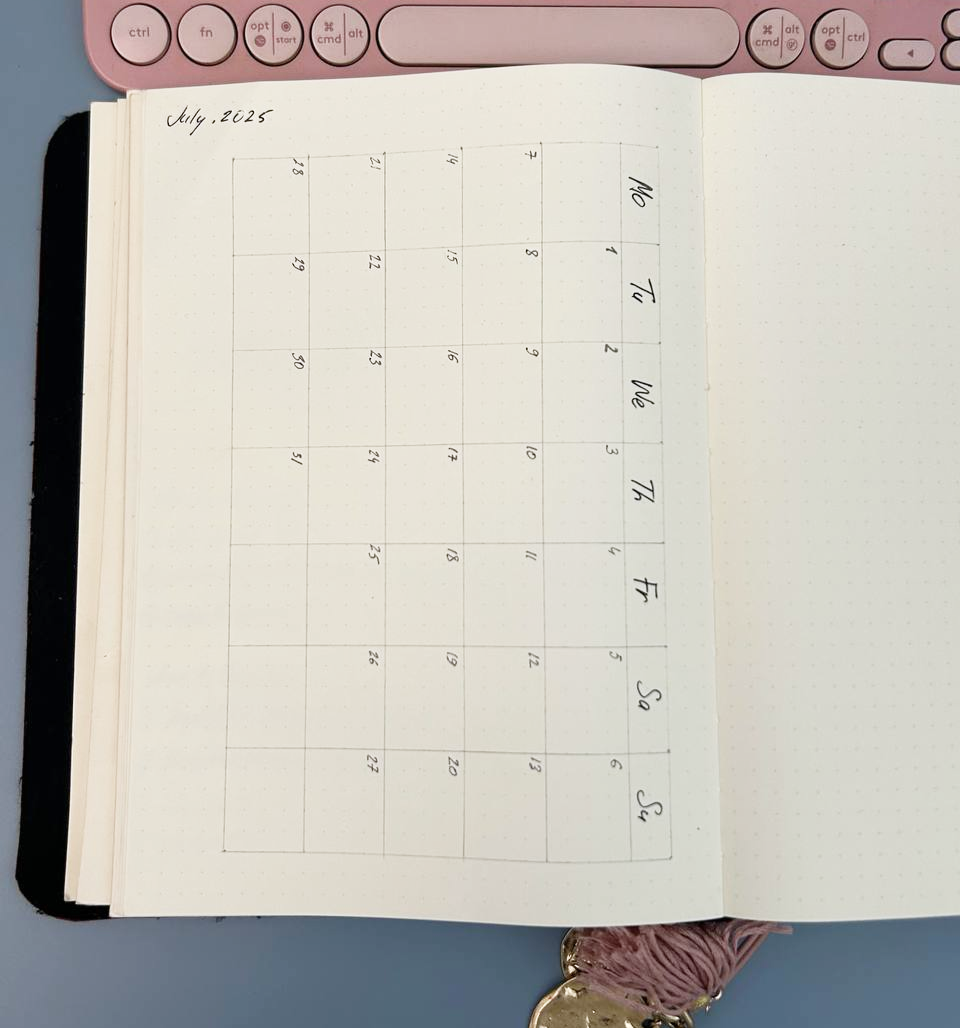
At the beginning of each month, I draw a horizontal calendar across a single page. But I don’t fill out the entire month — only the days that hold important tasks, like project deadlines, meetings, or key events.
Step 2: The Daily Entry Format
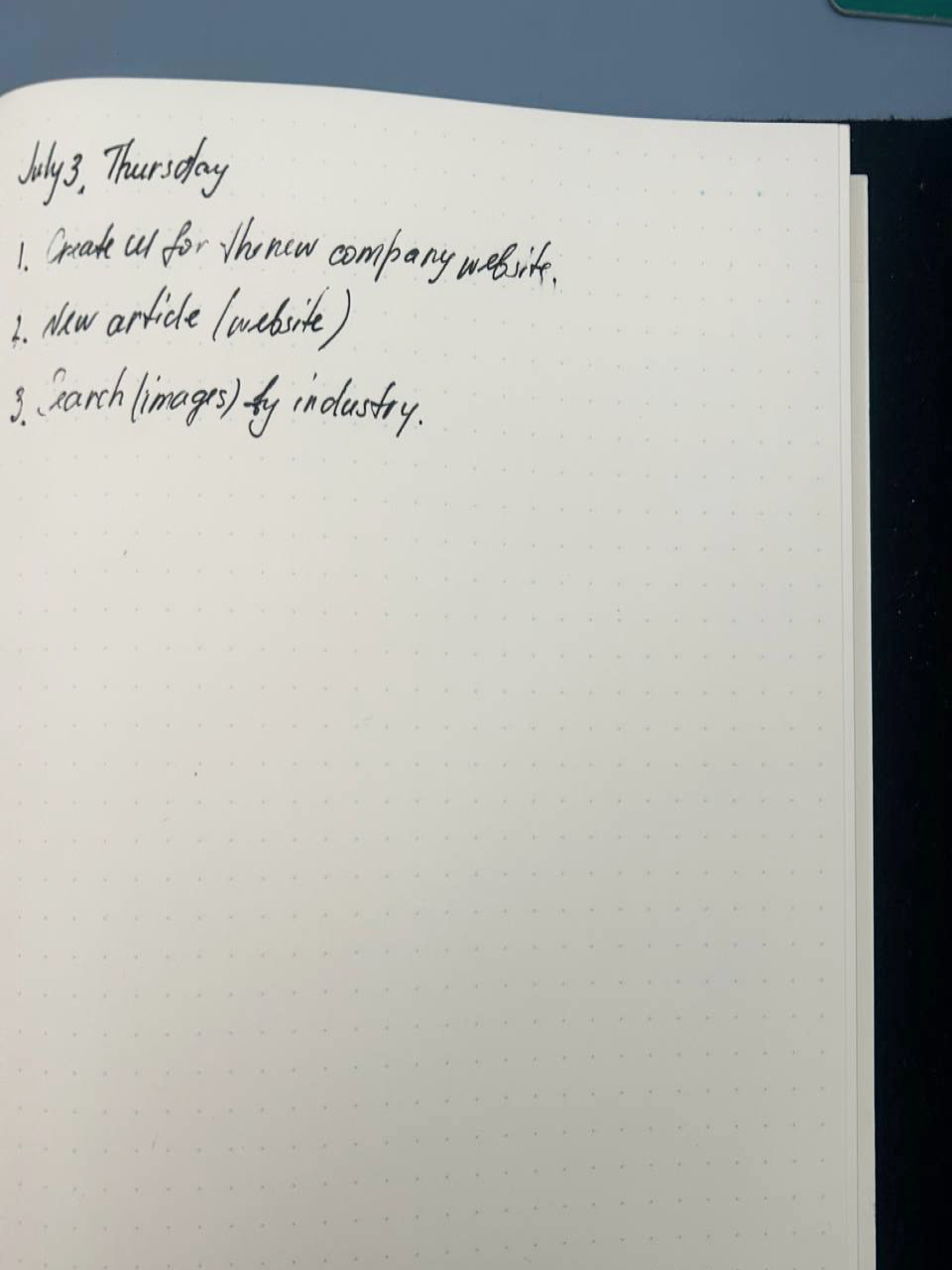
When a new day begins, I set aside either a full page or half a page. The structure is simple: date, day of the week, key tasks, and a blank space. I never write more than 3 tasks per day, but I commit to completing all of them with 100% focus.
Step 3: Filling the White Space
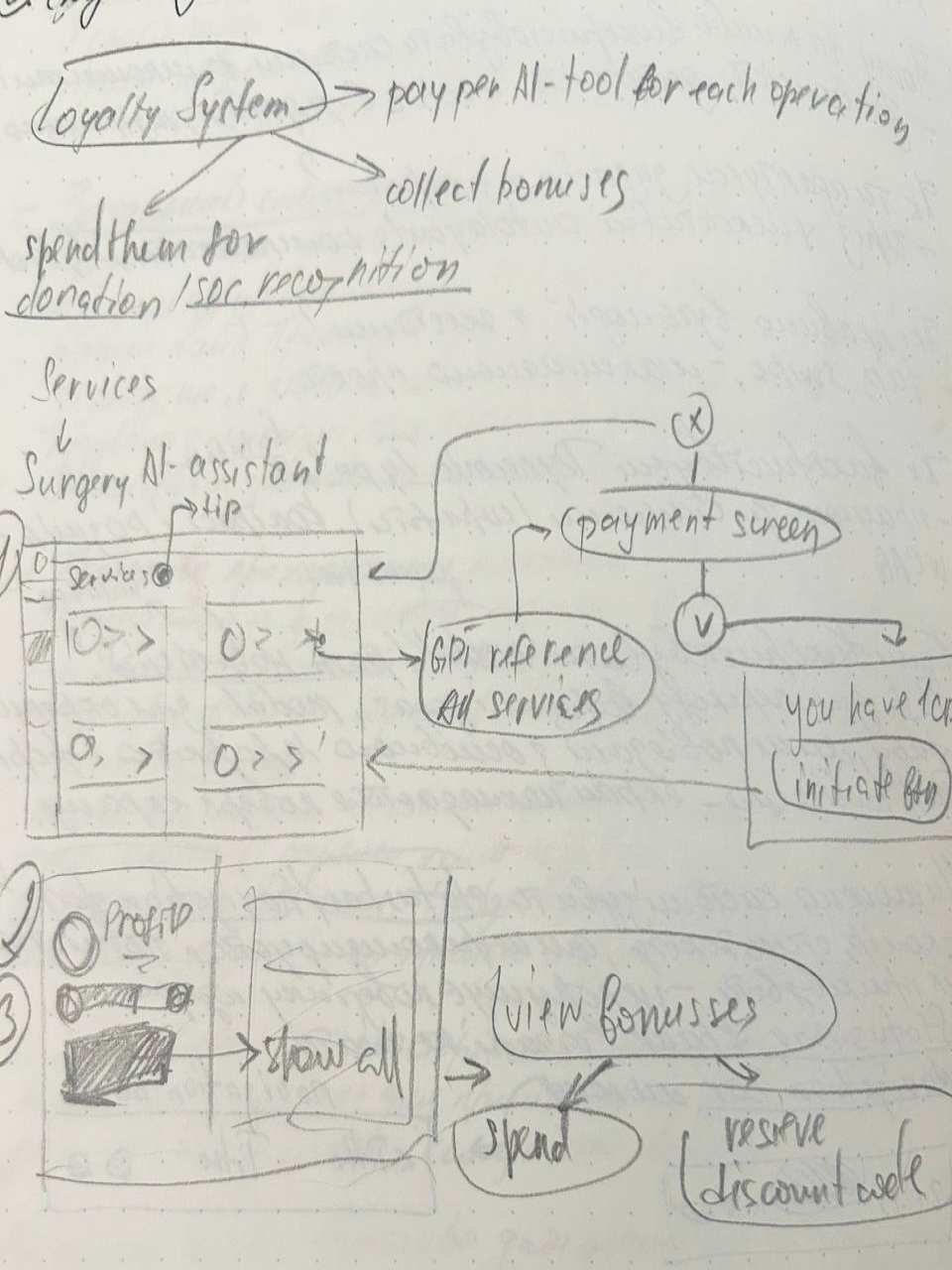
Blank space brings clarity. It turned out to be especially helpful during client meetings or deep user interviews. You don’t have time for polished layouts, but you do have room for quick thoughts, sketches, and raw notes.
What It Brings to Me as a UX/UI Designer
It reminded me that not all structure is supportive. Sometimes, pre-defined formats restrict more than they help.
Creating my own space made room for deeper thinking, better questions, and more intentional outcomes in the interfaces I build. It brought me back to the essence of design: listening to real needs, not just filling in boxes.
It taught me to start from what matters, to embrace whitespace as potential, and to trust raw thinking over polished appearances, even if it looks messy at first.
And maybe most importantly, it made me realize:Clarity isn’t something you schedule. It’s something you create.
@ Alina Verzhykivska 2025 | 0.26 CO2 per load
July 2, 2025
Highlight
Bed thoughts and white paper
You probably know what “shower thoughts” are, right? Well, I have “bed thoughts” — similar, but they hit differently.
That night, they were persistent, a bit controversial, something like: “I did so much today, planned even more… yet it feels like I was just spinning my wheels. Like something essential was missing — the result.”
In the morning, I grabbed a sheet of paper that was tucked under a book on my desk and simply wrote down everything that was in my head.
That’s how my experiment with a blank page began.

Hi! I’m Alina, a Senior UX/UI Designer, and this article is about a small experiment of mine — how a blank page, anxious thoughts, and burnout at work unexpectedly shifted my perspective on creativity.

Why Traditional Planners Don’t Work (At Least for Me)
A few years ago, I started to feel like I was missing structure in my workflow, so I began trying out different formats: Notion, phone notes, and of course, classic paper planners. Out of all of them, the physical planner felt most convenient — after 8 hours in front of a screen, I had zero desire to type out all my thoughts and tasks.
But even with the physical one, I felt pressure. The pages were already divided into days, weeks, months, and plus all those habit trackers like “how many glasses of water did you drink today?” And worst of all — there was no real space for ideas.
For me, it created this subtle pressure, like I couldn’t relax. I had to stay sharp, productive, energetic all the time. Tasks stopped feeling like needs and started looking more like proof of my “productivity.”
So, I often fell off the habit. I’d skip weeks, sometimes whole months, and eventually, that half-empty planner would end up in the trash or shoved onto a shelf with other half-used notebooks.
That’s it. Time to buy a new one.
But… what for?
The Start of the Experiment: A Blank Notebook
I decided to create my own space for thinking. Not a planner. Not a tracker. Just a blank notebook, and I would structure it myself, with only the sections I actually needed in that specific moment.
Why this matters:
- No pre-defined structure.
- You decide when the week starts, what deserves attention, and what doesn’t.
- No pressure to fill it in daily, only when there’s a real need.
- It becomes a therapeutic process.
The biggest privilege of this experiment? Starting the day not with a to-do list, but with the question: What actually matters right now?
The Format That Worked
I needed something simple and open-ended, yet grounding — not controlling, but providing context. So I picked up a plain notebook. No layouts, no calendars, no trackers or colorful tabs.
Just a blank page. And from there, I built exactly what I needed, by hand.
Step 1: Create the Calendar Manually
At the beginning of each month, I draw a horizontal calendar across a single page. But I don’t fill out the entire month — only the days that hold important tasks, like project deadlines, meetings, or key events.
Step 2: The Daily Entry Format
When a new day begins, I set aside either a full page or half a page. The structure is simple: date, day of the week, key tasks, and a blank space. I never write more than 3 tasks per day, but I commit to completing all of them with 100% focus.
Step 3: Filling the White Space
Blank space brings clarity. It turned out to be especially helpful during client meetings or deep user interviews. You don’t have time for polished layouts, but you do have room for quick thoughts, sketches, and raw notes.
What It Brings to Me as a UX/UI Designer
It reminded me that not all structure is supportive. Sometimes, pre-defined formats restrict more than they help.
Creating my own space made room for deeper thinking, better questions, and more intentional outcomes in the interfaces I build. It brought me back to the essence of design: listening to real needs, not just filling in boxes.
It taught me to start from what matters, to embrace whitespace as potential, and to trust raw thinking over polished appearances, even if it looks messy at first.
And maybe most importantly, it made me realize:Clarity isn’t something you schedule. It’s something you create.
@ Alina Verzhykivska 2025 | 0.26 CO2 per load
July 2, 2025
Highlight
Bed thoughts and white paper
You probably know what “shower thoughts” are, right? Well, I have “bed thoughts” — similar, but they hit differently.
That night, they were persistent, a bit controversial, something like: “I did so much today, planned even more… yet it feels like I was just spinning my wheels. Like something essential was missing — the result.”
In the morning, I grabbed a sheet of paper that was tucked under a book on my desk and simply wrote down everything that was in my head.
That’s how my experiment with a blank page began.

Hi! I’m Alina, a Senior UX/UI Designer, and this article is about a small experiment of mine — how a blank page, anxious thoughts, and burnout at work unexpectedly shifted my perspective on creativity.

Why Traditional Planners Don’t Work (At Least for Me)
A few years ago, I started to feel like I was missing structure in my workflow, so I began trying out different formats: Notion, phone notes, and of course, classic paper planners. Out of all of them, the physical planner felt most convenient — after 8 hours in front of a screen, I had zero desire to type out all my thoughts and tasks.
But even with the physical one, I felt pressure. The pages were already divided into days, weeks, months, and plus all those habit trackers like “how many glasses of water did you drink today?” And worst of all — there was no real space for ideas.
For me, it created this subtle pressure, like I couldn’t relax. I had to stay sharp, productive, energetic all the time. Tasks stopped feeling like needs and started looking more like proof of my “productivity.”
So, I often fell off the habit. I’d skip weeks, sometimes whole months, and eventually, that half-empty planner would end up in the trash or shoved onto a shelf with other half-used notebooks.
That’s it. Time to buy a new one.
But… what for?
The Start of the Experiment: A Blank Notebook
I decided to create my own space for thinking. Not a planner. Not a tracker. Just a blank notebook, and I would structure it myself, with only the sections I actually needed in that specific moment.
Why this matters:
- No pre-defined structure.
- You decide when the week starts, what deserves attention, and what doesn’t.
- No pressure to fill it in daily, only when there’s a real need.
- It becomes a therapeutic process.
The biggest privilege of this experiment?Starting the day not with a to-do list, but with the question: What actually matters right now?
The Format That Worked
I needed something simple and open-ended, yet grounding — not controlling, but providing context. So I picked up a plain notebook. No layouts, no calendars, no trackers or colorful tabs.
Just a blank page. And from there, I built exactly what I needed, by hand.
Step 1: Create the Calendar Manually
At the beginning of each month, I draw a horizontal calendar across a single page. But I don’t fill out the entire month — only the days that hold important tasks, like project deadlines, meetings, or key events.
Step 2: The Daily Entry Format
When a new day begins, I set aside either a full page or half a page. The structure is simple: date, day of the week, key tasks, and a blank space. I never write more than 3 tasks per day, but I commit to completing all of them with 100% focus.
Step 3: Filling the White Space
Blank space brings clarity. It turned out to be especially helpful during client meetings or deep user interviews. You don’t have time for polished layouts, but you do have room for quick thoughts, sketches, and raw notes.
What It Brings to Me as a UX/UI Designer
It reminded me that not all structure is supportive. Sometimes, pre-defined formats restrict more than they help.
Creating my own space made room for deeper thinking, better questions, and more intentional outcomes in the interfaces I build. It brought me back to the essence of design: listening to real needs, not just filling in boxes.
It taught me to start from what matters, to embrace whitespace as potential, and to trust raw thinking over polished appearances, even if it looks messy at first.
And maybe most importantly, it made me realize:Clarity isn’t something you schedule. It’s something you create.
@ Alina Verzhykivska 2025 | 0.26 CO2 per load